Derivatives, Leverage, and Liquidation: What Every US Crypto Bettor Needs to Know Before Going In
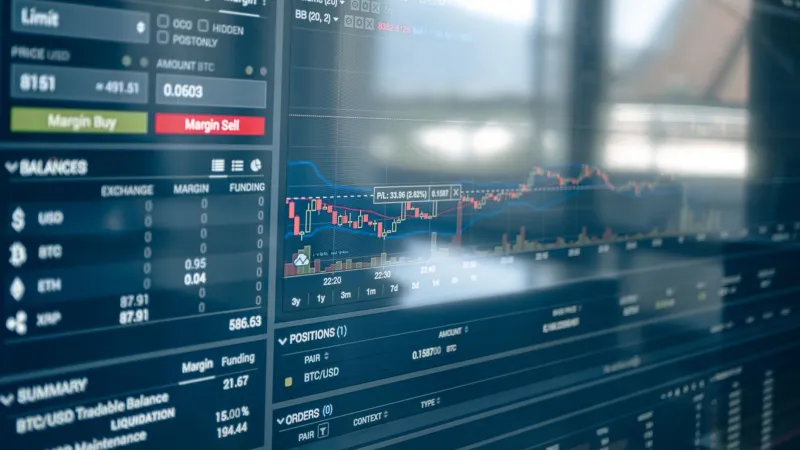
There's a version of crypto betting that feels like strapping a rocket to your bankroll. Derivatives trading — futures contracts, perpetual swaps, options — can turn a modest position into a massive payout. They can also zero out your account in minutes if you don't understand how the machinery works.
This isn't a scare piece. Derivatives are legitimate, powerful financial instruments that sophisticated traders use every day. But they operate on fundamentally different mechanics than spot market trading or traditional sports wagering. If you're a US bettor exploring the derivatives side of the crypto ecosystem, here's the honest breakdown you need before putting real money on the line.
Spot vs. Derivatives: The Core Difference
When you buy Bitcoin on a spot market, you own Bitcoin. Its price goes up, you profit. It goes down, you lose. Simple, linear, no surprises in the structure.
Derivatives don't work like that. A derivative is a contract — its value is derived from an underlying asset (say, BTC or ETH) rather than ownership of the asset itself. You're betting on price movement without actually holding the coin.
This unlocks leverage: the ability to control a large position with a small amount of capital. A 10x leveraged position on $100 gives you $1,000 of exposure. If the price moves 5% in your favor, you've made $50 — a 50% return on your actual capital. Sounds great, right?
Here's the other side. If the price moves 5% against you, you've lost $50 — half your capital, from a 5% price move. At 10x leverage, a 10% adverse move wipes you out entirely. That's liquidation.
Understanding Liquidation: The Risk That Catches People Off Guard
Liquidation is the automatic closure of your leveraged position when your losses approach your margin (the collateral you put up). The exchange doesn't wait for you to react. It closes your trade automatically to prevent your account from going negative.
For perpetual swaps — the most popular derivative product in crypto — liquidation prices are calculated based on your entry point and your leverage ratio. At 5x leverage, you have roughly a 20% move against you before liquidation. At 20x leverage, that window shrinks to about 5%.
Crypto is famous for violent short-term price swings. A 5% candle in either direction can happen in under an hour during high volatility periods. High leverage in that environment isn't aggressive trading — it's essentially flipping a coin with a time bomb attached.
The practical takeaway: if you're going to use leverage in any derivative-based context, stay conservative. Most experienced traders in the US crypto space cap themselves at 3x–5x for anything beyond short-term scalping. Anything above 10x starts requiring near-perfect timing and constant monitoring.
Funding Rates: The Hidden Cost You're Probably Ignoring
Perpetual futures don't have an expiration date — unlike traditional futures contracts that settle on a specific date. To keep perpetual prices anchored to the underlying spot price, exchanges use a mechanism called the funding rate.
Every 8 hours (on most major platforms), traders on the long side pay traders on the short side — or vice versa — a small percentage fee. When the market is heavily bullish and everyone is long, funding rates go positive, meaning longs pay shorts. When sentiment flips bearish, shorts pay longs.
This sounds small. It isn't, over time. During bull market frenzies, funding rates can hit 0.1% per 8-hour period — that's roughly 0.3% per day, or over 100% annualized. Hold a leveraged long position for a week during peak euphoria, and you've paid meaningful fees just to stay in the trade. This erodes your effective edge significantly.
Before entering any perpetual position, check the current funding rate. It's a real-time signal of market sentiment, and it directly affects your cost basis.
Options: Defined Risk, But Complex Mechanics
Crypto options offer something futures and perpetuals don't: defined maximum loss. When you buy a call or put option, the most you can lose is the premium you paid. No liquidation, no surprise margin calls.
That's genuinely appealing for risk-conscious bettors. But options come with their own complexity layer: Greeks.
- Delta measures how much your option's value moves per $1 move in the underlying asset.
- Theta represents time decay — options lose value as expiration approaches, even if the price doesn't move.
- Vega reflects sensitivity to implied volatility changes.
For a crypto bettor evaluating options, the most important concept is volatility compression. Crypto options tend to be priced with high implied volatility (IV) baked in, reflecting the market's expectation of big moves. If you buy an option expecting a massive price swing, but the market moves sideways instead, IV can collapse — and your option loses value even if you were directionally correct. This is a common frustration for options newcomers.
Is This Right for You? A Practical Framework
Before you touch derivatives in any form, answer these honestly:
1. Can you monitor positions actively? Leveraged positions can unravel fast. If you're placing a trade and then stepping away for hours, you're exposed. Derivatives require engagement.
2. Do you understand your liquidation price before you enter? Calculate it. Write it down. Know exactly how much of an adverse move it takes to wipe your position.
3. Are you using capital you can genuinely afford to lose? Derivatives are high-variance. Never use funds earmarked for bills, rent, or any necessity.
4. Have you practiced with small sizes first? Start with the smallest position sizes available. Get comfortable with the mechanics — funding rates, liquidation mechanics, order types — before scaling up.
5. Does the leverage level match your actual conviction? High leverage should only be used when your timing confidence is extremely high. Default to lower leverage and preserve your capital to fight another day.
The Bigger Picture
Derivatives aren't inherently dangerous — they're powerful tools that require proportionally greater understanding. The crypto space moves fast, and derivative markets move even faster. For US bettors who want to engage with this side of the ecosystem, the edge comes not from taking bigger risks, but from understanding the mechanics more deeply than the average participant.
Know your liquidation price. Watch your funding rates. Respect leverage. The bettors who last in this space are the ones who treat risk management as the primary skill — everything else follows.