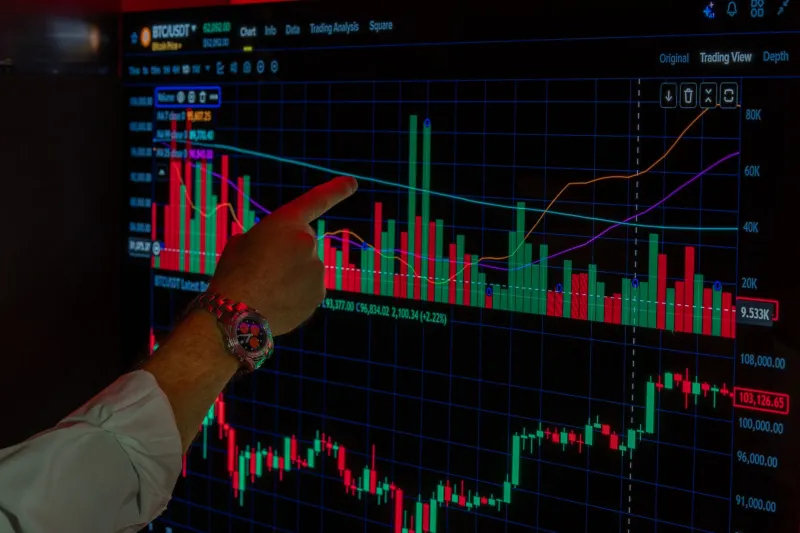
Beyond the Scoreboard: How Prediction Markets Are Becoming the Smartest Bet in Crypto

For years, crypto betting meant one thing: depositing Bitcoin, picking a team, and hoping the spread held. That version of the story isn't going anywhere. But quietly—and then all at once—a different kind of market has been eating up serious attention from sharp bettors who are done fighting for scraps on NFL lines.
Prediction markets. They're not new, but the decentralized version running on blockchain rails is a completely different animal than what came before. And for US bettors willing to put in the work, they might just be the most interesting playground in the entire crypto wagering ecosystem right now.
What Even Is a Prediction Market?
At its core, a prediction market lets you buy or sell shares in an outcome. Will the Fed raise rates at the next FOMC meeting? Will a particular tech stock close above $200 by Friday? Who wins the next presidential election? Each outcome is tokenized, priced between zero and one dollar, and traded like any other asset until the event resolves.
If you're right, your shares pay out at $1. If you're wrong, they go to zero. Simple concept, genuinely complex execution.
Platforms like Polymarket have exploded in volume over the last couple of years—processing hundreds of millions in trades on everything from geopolitical events to pop culture moments. The 2024 election cycle alone pushed Polymarket into mainstream financial media coverage, with traders treating it as a real-time sentiment indicator that sometimes outran traditional polling.
The Edge Opportunity Is Real (and Different)
Here's what makes prediction markets genuinely compelling for the sharp bettor crowd: the pricing inefficiencies are enormous compared to established sportsbooks.
A major sportsbook has entire teams of traders, algorithmic models, and years of data continuously tightening lines on NFL spreads. The market is mature. The juice is real. Finding a consistent edge is hard.
Prediction markets, especially on niche events, are often priced by a thin crowd of participants who may not have specialized knowledge. A bettor who follows Federal Reserve policy closely might spot a rate-decision market that's mispriced by 15 percentage points. Someone embedded in a specific tech sector might recognize a product launch market that the broader crowd has wrong.
That's not an edge you're going to find on a -110 moneyline.
The caveat—and it's a real one—is that liquidity can be thin. Getting a large position filled at a good price on a smaller market can be tricky, and slippage is a genuine cost you need to factor into your expected value calculations.
What's Actually Tradeable
The range of markets has grown faster than most people realize. Right now, depending on the platform, US bettors can find active markets on:
- Political outcomes: Presidential races, congressional elections, gubernatorial contests
- Economic indicators: Inflation prints, unemployment numbers, Fed decisions
- Tech and crypto events: Product launch dates, regulatory decisions, token price milestones
- Entertainment and culture: Award show winners, streaming viewership milestones, viral cultural moments
- International events: Foreign elections, treaty outcomes, geopolitical flashpoints
The diversity is both the appeal and the challenge. You need actual knowledge to find edges. Betting on a Fed decision without understanding monetary policy is just gambling. Betting on it with a genuine research advantage is something else entirely.
The Regulatory Gray Zone
Let's be direct about this: prediction markets in the US exist in genuinely murky legal territory. The CFTC has jurisdiction over certain event contracts, and there's been ongoing tension between regulators and platforms over what constitutes legal trading versus illegal gambling.
Polymarket, for example, blocked US users in 2022 following regulatory pressure, though workarounds remain widely discussed in crypto communities. Kalshi, a CFTC-regulated exchange, fought a legal battle to offer political event contracts and has pushed the space toward legitimacy—but the legal landscape is still shifting.
For US bettors, this means doing homework before depositing. Understand which platforms are accessible, which have regulatory standing, and what your actual legal exposure looks like. The opportunity is real, but so is the need to operate carefully.
Comparing Returns: Prediction Markets vs. Traditional Sportsbooks
The math can look very different depending on what you're betting.
A well-researched prediction market position on a niche event might offer true odds of 60% in your favor while the market prices it at 45%—that's a massive positive expected value that simply doesn't exist in a sportsbook environment where lines are sharp and vig is constant.
On the other hand, a high-volume political market on a major election might be priced more efficiently than you'd expect, with sophisticated traders and aggregated polling models compressing the edges significantly.
The bottom line: prediction markets reward specialization. The more niche your knowledge, the more likely you are to find mispricings. Generalist bettors hopping into a crowded election market are probably not finding edges. Domain experts operating in their lane might be looking at the best risk-adjusted returns in the entire crypto betting space.
How to Get Started Without Getting Wrecked
If you're curious about exploring prediction markets, start small and start where you actually know something. Don't deposit a significant bankroll into a market you found interesting on Twitter. Treat the first few months as tuition—learn how liquidity works, how resolution mechanics function, and how quickly consensus can shift.
Monitor oracle mechanisms carefully. Decentralized prediction markets resolve based on oracle systems that pull real-world data on-chain. Understanding how your chosen platform resolves disputes matters a lot when a contested outcome is worth money.
And keep a close eye on the regulatory environment. This space is evolving fast, and platforms that are accessible today might not be tomorrow. Diversifying across platforms and staying informed about CFTC developments is just good hygiene.
Prediction markets aren't replacing sports betting—they're expanding what's possible. For the bettor willing to put in the research, they might be the most exciting frontier in crypto wagering right now.